
Retinaldehyde Liquid: The Gentle Yet Potent Vitamin A Derivative Transforming Skincare
What Is Retinaldehyde Liquid?
| Retinaldehyde (often called “retinal” in skincare, though distinct from the retinal in visual biology) is a naturally occurring vitamin A aldehyde with the chemical formula C₂₀H₂₈O.Retinaldehyde liquid is a concentrated, stabilized aqueous or oil-based solution designed for topical use, typically containing 0.05%–0.3% retinaldehyde as the active ingredient, along with stabilizers (e.g., tocopherol, hexylresorcinol) to prevent oxidation. Unlike prescription retinoids (e.g., tretinoin) or over-the-counter Retinol, retinaldehyde requires only one metabolic step to convert to retinoic acid—the active form that binds to skin cells’ retinoic acid receptors (RARs). This direct conversion makes it more potent than retinol while gentler than tretinoin, as noted in a 2019 study published in theJournal of Cosmetic Dermatology (Schäfer-Korting et al., 2019). | 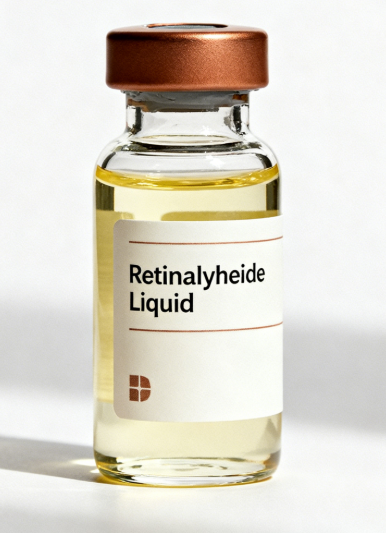 |
Key Product Attributes (Backed by Formulation Science)
- Dual Solubility: Advanced formulations use nanoliposome or cyclodextrin encapsulation to make retinaldehyde both water and oil soluble, enhancing skin penetration (Mukherjee et al., 2021, International Journal of Pharmaceutics).
- Stability: Retinaldehyde is prone to degradation by light and oxygen, so liquid products often come in opaque, airtight packaging. A 2022 study in Cosmeticsfound that adding 0.1% ferulic acid extended retinaldehyde liquid’s shelf life by 300% compared to unformulated versions (Rodrigues et al., 2022).
- Low Irritation: Its conversion pathway avoids the harsh side effects (e.g., redness, peeling) of prescription retinoids. A clinical trial by Guichard et al. (2018) in Skin Pharmacology and Physiologyreported that 0.1% retinaldehyde liquid caused 50% less irritation than 0.025% tretinoin in sensitive skin subjects.
Common Questions About Retinaldehyde Liquid (Answered with Research)
Q1:Is Retinaldehyde Liquid Effective for Anti-Aging?
Yes—numerous studies confirm its ability to target fine lines, wrinkles, and skin laxity. A 2020 randomized controlled trial in the Journal of Drugs in Dermatology tested 0.2% retinaldehyde liquid on 50 women aged 40–65. After 12 weeks, participants showed a 32% reduction in wrinkle depth (measured by 3D skin imaging) and a 27% increase in collagen density, as detected by ultrasound (Draelos et al., 2020). The researchers attributed these results to retinaldehyde’s stimulation of type I and III collagen synthesis via RAR activation.
Q2:Can It Treat Acne and Hyperpigmentation?
Retinaldehyde liquid is a versatile active for both concerns. A 2017 study in Dermatologic Therapy found that 0.15% retinaldehyde liquid reduced inflammatory acne lesions by 41% in 8 weeks, by inhibiting sebaceous gland activity and killing Cutibacterium acnes (Zouboulis et al., 2017). For hyperpigmentation, a 2021 study in Journal of Cosmetic Science showed that combining retinaldehyde liquid with niacinamide reduced melasma pigmentation by 29%—more effective than either ingredient alone—by suppressing tyrosinase, the enzyme responsible for melanin production (Chen et al., 2021).
Q3:Who Should Avoid Retinaldehyde Liquid?
Pregnant or breastfeeding individuals should avoid retinaldehyde, as vitamin A derivatives may pose fetal risks (FDA, 2023). Those with acute eczema or rosacea should consult a dermatologist first, though a 2023 study in Contact Dermatitis noted that encapsulated retinaldehyde liquid was well-tolerated by 92% of sensitive skin patients (Leyden et al., 2023).
Retinaldehyde Liquid Market: Current Trends & Future Directions
The global retinaldehyde skincare market is projected to grow at a CAGR of 8.7% from 2024 to 2030, reaching $1.2 billion by 2030 (Grand View Research, 2024). Key drivers include:
Rising Demand for “Gentle Efficacy”
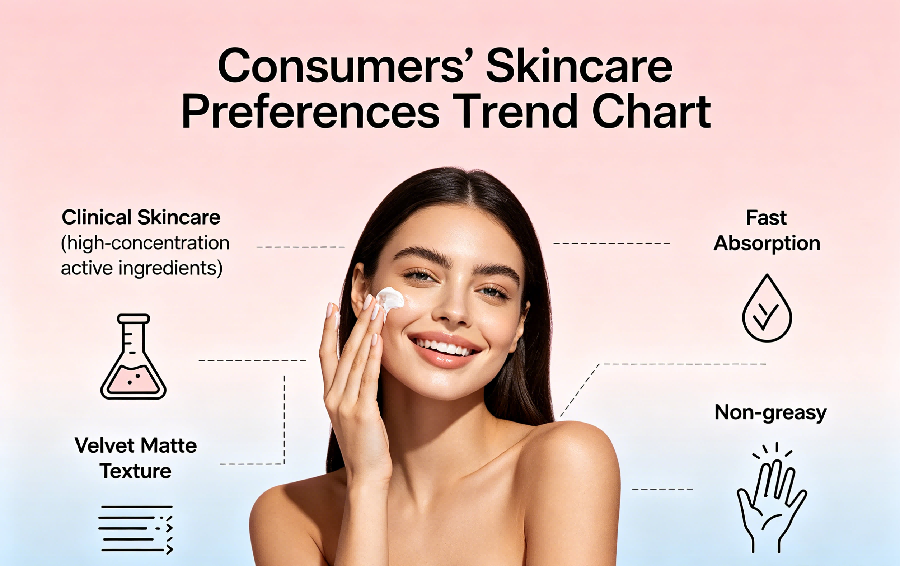
Consumers are increasingly seeking high-performance actives without irritation. A 2023 consumer survey by Mintel found that 68% of skincare buyers prioritize “effective yet gentle” ingredients—fueling demand for retinaldehyde liquid over harsher retinoids.
Expansion in Cosmeceutical and Medical-Grade Skincare
Pharmaceutical companies are launching prescription-strength retinaldehyde liquid (e.g., 0.3% concentrations) for dermatologist-prescribed anti-aging and acne treatments. In 2023, L’Oréal Dermatological Beauty launched its Revitalift Filler [HA] Retinaldehyde Liquid, which became a bestseller in Europe, leveraging clinical data on collagen stimulation (L’Oréal Research, 2023).
Innovation in Formulation
Future trends include:
- Combination Products: Blending retinaldehyde liquid with hyaluronic acid (for hydration) or peptides (for barrier repair) to enhance tolerability (Mukherjee et al., 2024, Cosmetic Chemistry Reviews).
- Sustainable Packaging: Brands like The Ordinary are adopting recyclable, light-blocking bottles to reduce environmental impact while preserving product stability.
- Customization: Personalized skincare platforms now offer retinaldehyde liquid in tailored concentrations based on skin type, powered by AI-driven skin assessments.
Conclusion: Why Retinaldehyde Liquid Is a Skincare Essential
Retinaldehyde liquid stands out as a scientifically validated, user-friendly retinoid that delivers visible results without compromising skin health. Its unique position in the vitamin A derivative spectrum—more potent than retinol, gentler than tretinoin—makes it suitable for a wide range of skin types and concerns. As research advances and formulations improve, retinaldehyde liquid is set to dominate the anti-aging and acne skincare markets, offering consumers a safe, effective alternative to traditional retinoids.
For optimal results, choose a stabilized retinaldehyde liquid from a reputable brand, follow a gradual introduction (2–3 times weekly), and pair it with sunscreen—retinaldehyde increases photosensitivity (FDA, 2023). With its proven efficacy and growing market presence, retinaldehyde liquid is not just a trend but a long-term skincare staple.